A well-maintained cast iron skillet is more than just cookware; it’s a culinary heirloom that can be passed down through generations. Known for its incredible heat retention, even cooking, and the ability to develop a natural, non-stick surface, it is a versatile workhorse in any kitchen. However, its unique properties also mean it requires a specific care routine. The fear of rust or ruining the precious “seasoning” prevents many from embracing cast iron. The truth is, caring for this durable piece is simple once you understand the basic principles behind it. Proper cleaning is not about treating it with kid gloves but about maintaining the polymerized oil layer that gives the skillet its signature performance.
Understanding this process is key to a lifetime of delicious meals, from perfectly seared steaks to crispy cornbread. This guide will demystify the cleaning process, providing clear, step-by-step instructions for daily maintenance, tackling tough messes, and even restoring a neglected, rusty pan to its former glory. By following these methods, you will ensure your cast iron remains a treasured and functional part of your cooking arsenal.
The Science of a Perfectly Seasoned Skillet
Before diving into cleaning methods, it’s crucial to understand what “seasoning” truly is. It isn’t just a layer of oil, nor is it a chemical coating. Seasoning is the result of a scientific process called polymerization. When thin layers of fat or oil are heated on the surface of the cast iron to a high temperature, the fat molecules transform. They reorganize and bond with each other and the metal, creating a hard, slick, and stable surface. This slick coating is a form of natural plastic that is bonded directly to the iron.
This polymerized layer serves two critical functions. First, it creates a non-stick surface that improves with every use. As you cook with fats and oils, you are continually adding to and reinforcing this layer. Second, and just as important, it forms a protective barrier that seals the porous iron from moisture, which is the primary cause of rust. Every cleaning technique discussed is fundamentally designed to clean the cooking surface while preserving and protecting this essential seasoning. Aggressive scrubbing with harsh abrasives or using strong detergents can strip this layer, exposing the raw iron and making it vulnerable to rust and causing food to stick.
Essential Tools for Cast Iron Care
You do not need an arsenal of specialized equipment to care for your skillet, but having the right tools makes the job much easier and more effective. Using the wrong tools can damage the seasoning you’ve worked so hard to build. Here are the must-haves for proper cast iron maintenance:
- Pan Scraper: A small, rigid piece of plastic or wood is perfect for dislodging stubborn bits of food without scratching the seasoning. Many companies make scrapers specifically designed for this purpose with curved edges that fit the skillet’s corners.
- Non-Abrasive Sponge or Stiff Brush: For general cleaning, a standard sponge (use the non-scrubby side) or a stiff-bristled nylon brush works perfectly. These are gentle enough to clean the surface without stripping the seasoning.
- Chainmail Scrubber: For more resilient, stuck-on food, a chainmail scrubber is an excellent investment. It effectively removes debris without harming the polymerized oil layer.
- Lint-Free Cloth or Paper Towels: These are absolutely essential for the drying and oiling steps. A lint-free cloth is a more sustainable option, but paper towels work just as well to ensure no moisture is left behind.
- High Smoke Point Cooking Oil: For post-cleaning maintenance, you’ll need a neutral cooking oil with a high smoke point. Good choices include grapeseed oil, canola oil, vegetable oil, or specialized cast iron seasoning waxes.
How to Clean Your Cast Iron Skillet After Everyday Use
For a skillet that’s in regular use and good condition, daily cleaning is a quick and straightforward process that should take no more than a few minutes. The key is to act quickly after cooking.
- Clean While Warm: The best time to clean your skillet is right after you’re done cooking, while it’s still warm but not dangerously hot. The warmth helps prevent food from hardening onto the surface, making it much easier to remove.
- Scrape and Rinse: Use your pan scraper to remove any large food particles. Then, rinse the skillet under hot running water. Use your non-abrasive sponge or brush to gently scrub away any remaining residue. Contrary to popular myth, a small drop of mild dish soap is acceptable for a very greasy pan, especially if your seasoning is well-established. Modern dish soaps are far gentler than the lye-based soaps of the past that originally created this rule. However, for most cleanups, hot water and a good scrub are all that is needed.
- Dry Immediately and Thoroughly: This is the most critical step in preventing rust. Never let your cast iron air-dry. After rinsing, wipe it completely dry with a lint-free cloth or paper towels. To ensure every last bit of moisture is gone, place the skillet back on the stovetop over low heat for a few minutes until it is bone dry.
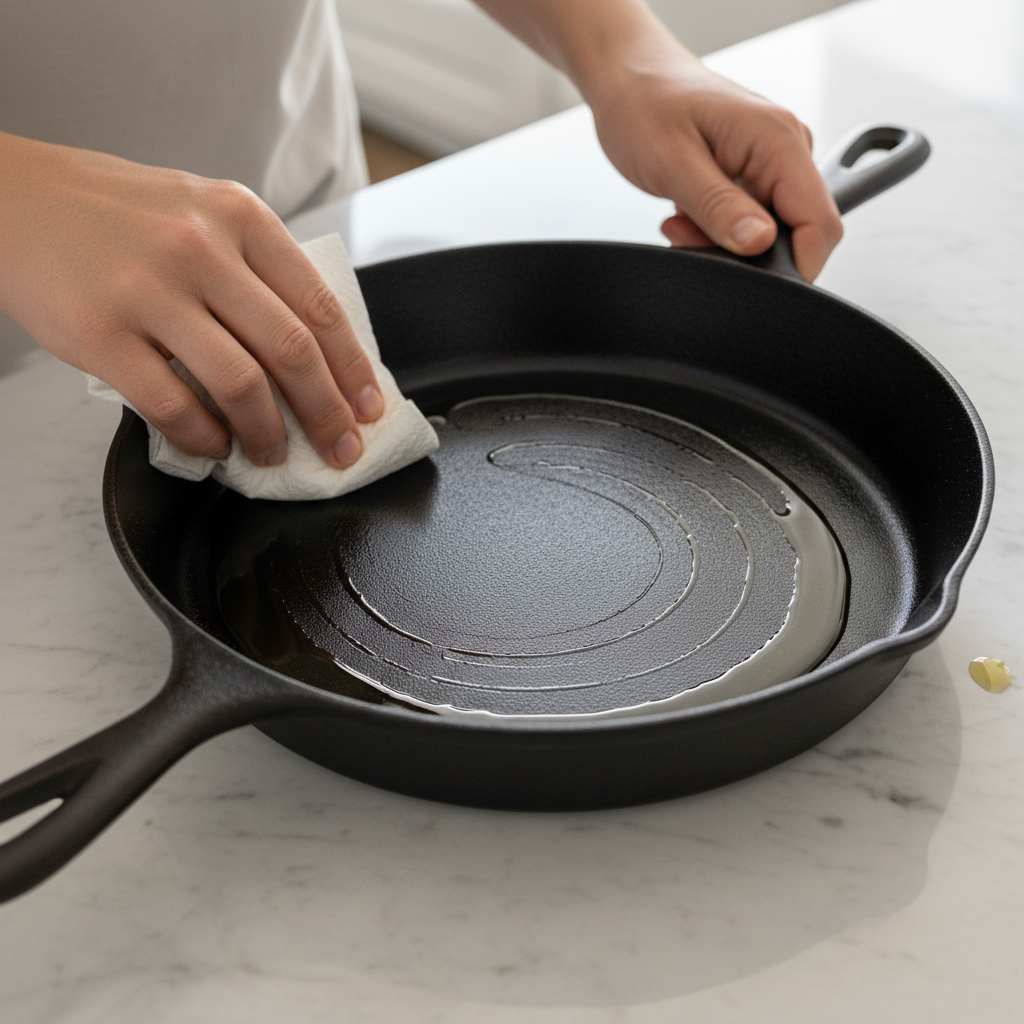
- Apply a Maintenance Coat of Oil: Once the skillet is dry and still slightly warm, add about a half-teaspoon of your chosen cooking oil into the pan. Use a paper towel to rub the oil all over the interior cooking surface, creating a very thin, even layer. Continue to wipe until the pan no longer looks greasy. This light coat protects the seasoning and keeps it ready for its next use.
Restoring a Neglected Pan: Dealing with Rust and Stubborn Residue
Sometimes a skillet needs more than just a routine cleaning. Whether you’ve found a vintage piece at a flea market or neglected your own, rust and caked-on grime can be fixed. This process involves stripping the pan down to the bare metal and starting the seasoning process from scratch. Restoring an old skillet can dramatically improve its overall appearance, much like modern approaches in cosmetic dentistry aim to restore a smile.
Step 1: Stripping the Rust
To remove rust, you need a mild acid. A 50/50 solution of white vinegar and water is perfect for this. Submerge the pan in the solution for a period of 30 to 60 minutes. Do not leave it for longer, as the acid can begin to damage the iron itself. After soaking, remove the pan and scrub it vigorously with steel wool or a copper scouring pad. This is one of the few times when using such an abrasive tool is appropriate, as the goal is to remove everything, including the old, damaged seasoning and all traces of rust.
Step 2: The Full Re-Seasoning Process
Once you have scrubbed the pan down to the bare, gray metal, you must act quickly to prevent flash rust from forming. Immediately wash it with hot, soapy water to remove any vinegar residue and metal dust. Dry it completely on the stovetop as you would for daily maintenance. Now, you are ready to build a new foundation of seasoning.
- Apply a very thin layer of high-smoke-point oil (like flaxseed or grapeseed) over the entire pan—inside, outside, and the handle.
- Using a clean paper towel, wipe off the oil as if you made a mistake. The goal is a micro-thin layer that you can barely see. Too much oil will result in a sticky, uneven finish.
- Place the skillet upside down in an oven preheated to 450-500°F (230-260°C). Placing it upside down prevents oil from pooling. Put a baking sheet on the rack below to catch any potential drips.
- Bake the skillet for one hour. Then, turn off the oven and let the pan cool down completely inside the oven.
- Repeat this process of oiling and baking at least three to five more times. Each layer will build upon the last, creating a durable, hard, and beautifully non-stick surface. This process takes time, but the reward is a fully restored skillet that will perform flawlessly.

To simplify the process, here is a table outlining the essential dos and don’ts of cast iron care. Following these guidelines will help preserve your skillet’s seasoning and extend its life indefinitely.